Home Decor

Lifestyle & Fashion

Classroom Blog

Showing posts with label math workshop. Show all posts

Everything You Need to Know About Math Workshop!


It's been quite some time since I've blogged about Math Workshop. As one of my school's math coaches, I'm fully immersed in all things math while teaching full time throughout the year. I'm lucky enough to work alongside teachers, host coaching cycles, write curriculum for my school and present PD sessions, all while teaching a class of my own. It helps my mindset and perspective while in my role as a coach and I'm hoping it makes me more realistic and approachable to my colleagues. 

This post contains affiliate links for your shopping convenience. 

After getting some emails and messages with questions regarding math workshop, I thought it might be beneficial for you to get a peek into what math workshop looks like in my classroom and how I incorporate my products. I'm so passionate about this that I've had to remind myself to keep it condensed and reader friendly, while also giving you the most important information all in one place!


KICKING OFF MATH WORKSHOP

It's so, so, so important to remember that math workshop doesn't happen without any math community building work! Also, it doesn't run smoothly after doing it for just one day. It takes some serious modeling and practice. I've had years where my first graders got the hang of it after a few days, and then there have been years where is takes weeks and maybe now that I think about it- months! Ha! It's all about your students and what works for them.

To kick it off, I spend a week reading math read alouds, discussing where we find numbers in the real world, coming up with a list of "rules for the tools," setting the workshop expectations and completing a "math about me" activity. All of these activities, along with a lesson plan guide and read aloud suggestions can found in my Math Community Building unit in my TPT store. You can find it here! It's so important to get to this before moving to content. In the upper grades, I might spend even more time discussing group or partnership roles/expectations.

As in any content area, when setting expectations, it's so important to make a shared list with your class and hang them in the classroom to refer to when modeling/self assessing throughout the year. I adjust the print settings to zoom 200% when printing the "Rules for the Tools" and "Math Workshop Expectations." This will print it in 4 separate pages, in which you can cut and assemble to make it an anchor chart. I print it on cardstock, laminate it and use it from year to year. 


Below is my favorite math read aloud when kicking off math workshop for any grade level. It's a story about all the numbers in the world going missing. It's such a great connection to real world math and sends the message that exploring numbers is very meaningful. You can shop it on Amazon for under $5 here.


LESSON PLANNING

When thinking of how to plan a math workshop lesson, remember all that you know about reading and writing workshop. I follow the same mini-lesson format! Start with a connection, model the skill or strategy, incorporate active engagement (students working on their whiteboard or notebook & turning and talking with their neighbor) and then link to what they are doing in math tubs/centers/rotations (all inter-changeable). 

The only thing that differs from literacy mini-lessons is that I also include a warm-up before I begin. I am strategic in choosing a warm-up. It's of course a skill that has already been previously taught, but most importantly I always try to choose one that builds up or leads to the new skills/concept we are learning that day. For example, if it's adding 3 addends, we warm up adding 2. If its adding two digit numbers we may warm-up our brains by representing the numbers with base ten blocks, and then use that as a strategy to help add the two digit numbers in the lesson. I hope I am making this clear. 

This mini-lesson format is ultimately the perfect combination of reviewing a previous skill, engaging students in a new skill and quickly monitoring which students may need a reteach. 

If you're like me and you benefit from seeing a model lesson, I have shared a lesson below that I used to model for a coaching cycle. 

GROUPING STUDENTS & CENTER ROTATIONS

I have seen many different ways to organize and set up the "independent practice" portion of math workshop. Many teachers use math centers, stations, tubs, rotations, etc. In my opinion, I truly feel that there is no *one* perfect or *right way* to organize this piece. I feel that it's left for each teacher to decide how they would like to establish their routine, as long as students are engagedin meaningful centers that match the lesson objective.

Below you can find an example of the math workshop rotation schedule on the board for my students. (Note: at the start of the year we only do either 2/3 math tubs) For each lesson, I have 3 or 4 math tub activities that vary- they include games with manipulatives, math printables, math workbook pages, math fact fluency centers, math sorts, etc. I try to balance games and worksheets- I whole heartedly believe math is not a worksheet, but sometimes it's important to have something as your informal assessment. 

The shapes represent my groups. In my classroom, under the shapes I would list the names of the students that are in that shape group. The first rotation is where they start. Rotation 2 is where they head as soon as they are finished. Timing can be up to you, but I found that allowing students to rotate to the next rotation freely minimizes students behavior. I require students to finish both rotations before moving to a free choice rotation (one that was not assigned to them). They LOVE the free choice component!  

Math tub 1 is usually a readiness activity- it can be differentiated by using tools/manipulatives for support, smaller numbers or with guided practice. Math tub 2 and 3 are grade level activities, while math tub 4 is an enrichment center. Students at math tub 4 will be challenged to think critically and deeply or apply the learned skill to a new skill. This is not to be confused with the concept of students that need to be stretched should have to do *more work.* If you notice, math tub 1 and 2 switch and math tub 3 and 4 switch. Therefore, it's important to think about which students will be assigned to each group. I attempt to break up my "at grade level" students into a group that benefits from reinforcement (the readiness activity), as well as one that can be stretched (the enrichment activity). This helps me guide who should be placed a tubs 2 and 3.

When deciding groups, or which students to pull over for my strategy group lesson, I use pre-tests and the strategy group planning sheet above to help prepare at the start of each unit. This is the perfect way to identify which students need a strategy group guided math lesson. This is known as the "Math with Miss Vaz" portion of the stations. This includes me modeling (guiding them) through the skill or strategy. I have found that once I model a few times and have them practice with me a few times, many of them have mastered the skill. Therefore I may send students back to a center to work independently. This allows me to go from a group of 5ish students, to possibly 1 or 2 that can benefit from some more 1 on 1 time.  Eventually, all my guided math students will move back to a math tub (most likely tub 1 or 2) so that I can float and assess my other students in centers.


Often times my guided math lessons use resources from my Math Toolkit resource in my TPT shop. You can find it here. It includes 25 resources aligned to the first grade CCSS and doubles as an RTI binder too! 

MATH CENTERS, GAMES & MATH FACT FLUENCY

Below you'll find some of my favorite math centers and games that I use ALL YEAR LONG! They are so easy to prep and print and my students LOVE them! They align with first grade CCSS and encourage the use of manipulatives. My students ask to play them during recess- that's how much of a hit they are! 

I place them in sleeve protects and have students use their whiteboard markers when playing. You can find all of the Math Games and Centers in my TPT shop. Click here to see more!


MATH FACT FRIDAYS

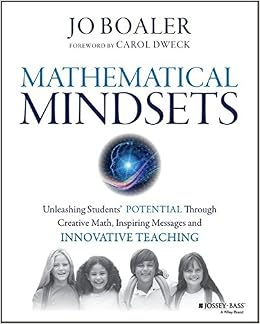
Our school has built in "flex days" on our math curriculum map. Therefore, teachers have the autonomy to incorporate supplemental activities or instruction. Therefore, I have adopted "Math Fact Fridays." On Fridays, I teach a math fact mini-lesson and then we break out into math fact centers. If you're looking to freshen up your math fact fluency instruction, I highly recommend reading Mathematical Mindsets by Jo Boaler.  

I've adapted this refined way of teaching into math fact fluency and incorporated a number sense component. It includes a teaching progression, explination of the strategies, math fact centers, strategy group planning sheets and assessments. You can find my Building Number Sense with Math Facts (addition and subtraction) in my TPT store here. 


I hope I was able to answer some questions and give you a peek into my math instruction. If you have any follow-up questions, be sure to comment below or send me an email! 

1

First Day of School Lesson Plans and Activities


The first days back are the most exciting and yet overwhelming days of the year! Empty bulletin boards, a new audience for all your favorite read alouds and of course, all the crafts and activities you've pinned on your "back-to-school" Pinterest board all summer. In full disclosure, I was victim to trying to do it all on the first day but the reality is- you can't! Last year I attempted to try a new back to school method- less is more. I tried slowing down and staying simple with my lesson plans for the first days. Rather than rushing to try to do it all, I made sure to take time to enjoy the small moments that we need to cherish those first few days. I definitely recommend it!!

This post contains affiliate links for your shopping convenience. I receive a small income each time someone makes a purchase using some of my links, which helps to support the blog.

I'm sharing with you my short range lesson plans for the first days of first grade and hope you can find some inspiration along the way! I've mapped out the all the read alouds, crafts and activities as well as teaching into the routines and establishing the rules/expectations. It's brief but get's the job done! :)


The first day we spend a lot of time learning and practicing each other's names and doing ice breakers to get to know more about one another. Our focus is on building a community, in addition to reviewing and modeling the rules and procedures. I love to integrate this during our daily morning meeting time. Some examples include graphing our kindergarten teacher and reading/responding to the book "You're Finally Here" with their summer activities (anchor chart idea from Amy over at Step Into 2nd Grade)!


Another activity I do to make the student feel comfortable is one I got from the lovely Cara Carroll over the The First Grade Parade. After reading the book, The Girl Who Never Made Mistakes, I tell a story about "Miss Take" to my students. *Cue the dramatics :)* I share all the mistakes "Miss Take" makes and what she has learned from them. Then I tell them that "Miss Take" is actually me. *Gasp* This encourages your students to not only be okay with making mistakes, but also teaches them how to learn and grow from them.


 Once that is in place and students feel safe and secure, its important to foster the foundation for becoming a life long learner. I find I love to engage my learners first through my love of reading. The best way is to put on your teacher pants and do some of your best read alouds. How spot on is this meme?! It could not be more accurate.
So, choose your favorite author or book series and align them with engaging crafts and book talks. I love to start out with Kevin Henkes books- they are perfect for making connections to hook my kiddos as readers and their messages are perfect for building a classroom culture. His characters are so strong and memorable that we even refer to them as a mentor text throughout the year.

Chrysanthemum is great to explore learning names and Wemberly Worried is the perfect text to make connections! There are so many great resources online to supplement these texts if you are looking for a little something extra.

You can find the books Chrysanthemum here and Wemberly Worried here.  


My personal favorite is this craftivity I got from Amy Lemons over at Step Into 2nd Grade! I tried to find the link to the template but I can't seem to find it! I'm sorry! :( Amy if you see this, hook a girl up! I'd be happy to provide the link. 


I have all the heart eyes for this craft- I love the way they all look hanging up year after year at back to school time. Their responses are always so precious! Take a look at this cutie!


There are so many other great read alouds to build community this time of year. Here are some of my favorites!  Each of them have such a strong and unique message. I love the way the messages go hand in hand with building our classroom rules/promise. If you're looking for ways to integrate them into your plans, refer back to my lesson plans.

Click on the titles below to snag yourself a copy!

You're Finally Here (currently unavailable)

Spaghetti in a Hot Dog Bun

My Mouth is a Volcano

Stand Tall Molly Lou Melon

Lacey Walker, Nonstop Talker

Enemy Pie

Recess Queen

First Grade Stinks

First Grade Dropout! 


Also, have I mentioned David Shannon is a genius?! I read these books a few times a year, year after year and I still laugh... every time. Usually the kiddos enjoy this so much that it's the perfect behavior mentor text! After reading, we make this chart and complete one of the fabulous crafts from the Friends in First by Lyndsey over at A Year of Many Firsts about being respectful, responsible, really safe and ready to learn.

These crafts are my go to at the beginning of the year. They truly set the tone for clear expectations in the classroom.


I know adorable, right?! I can't take any of the credit... Lyndsey is amazing and all her products are fabulous. You should go check them out here! I use many of the crafts and printables from that product, as well as many of her themed products all year long. What I love most about these crafts is that above all, they have meaning and purpose. It allows my kiddos to develop a stronger conceptual understanding of the 4 "Rs" (responsible, respectful, really safe and ready to learn) and set goals for how to attain each of our class rules.


Lastly, just before I am ready to start teaching the curriculum, there are two very important content related community building activities I love to do. If your school follows the Responsive Classroom approach to behavior, you'll know this activity very well!

As a class, we spend time thinking about all our "Hopes and Dreams" for the year. I usually give the students some private thinking time before sharing with their neighbor before sharing it out with the class to put on the anchor chart. After I list their ideas, they go to their seats and write/draw out their hope and dream for the year. You can find this printable in in my store here.  After, I place them on colored paper before laminating and hanging them for the start of the year. 


Lastly, before starting Math Workshop I use my Math Workshop Community Building unit to build our community of mathematicians, establish routines and set expectations.  This is the perfect math workshop priming unit before you dive into teaching content.

This resource includes templates to use as anchor charts. When printing, I change the print features to "zoom 200%." This will print the document into 4 pieces, which can be cut and glued to create a larger poster size. 
After we complete them as a class, I laminate and hang them up to reference during our first unit. Often times I reiterate these expectations and lessons throughout the "first six weeks" of school.  You have quite the eye of detail if you notice that the fonts are slightly different. I recently updated this product! :) 


The resource also includes printables to make your very own "Math About Me & My Community" class book. This is the perfect activity for getting to explore real world math, while also getting to know our classmates. 


I hope you found some inspiration for any first days of school lesson plan activities! I'm always looking for any new ideas myself. If you have any you'd like to share, be sure to comment below! :) 


2

Building Number Sense with Math Facts

You may or may not already know that I am a full time first grade teacher, as well as one of two of my school's math coaches. It's been quite a test of balancing teaching, coaching, blogging and a personal life. I would have loved to take more time to create additional products for TPT this year, but my role as math coach and teacher has taken precedence over smaller projects. In doing so, I was able to find something that I have truly become passionate about and I am *so* excited to share it with you today! This post contains affiliate links for your shopping convenience.

This year our school has been focusing on implementing the Mathematical Practices, while also transitioning to a math workshop style instruction. My fellow math coach and I have been doing research and attending PDs around these topics in order to lead workshops during our inservice days.  After reading the book Mathematical Mindsets by Jo Boaler, I became inspired by the dramatic shift in the way Jo Boaler and her colleagues were approaching math facts. They stressed the importance of number sense rather than remote memorization. According to her chapter, “Fluency Without Fear,” Boaler states, “math facts are important but the memorization of math facts through repetition, practice and timed testing are unnecessary and damaging. Math facts are best learned though the use of numbers in different ways and situations.”
Image result for mathematical mindsets

Education has created a climate and a culture that emphasizes memorization and speed when learning math facts. When classrooms focus primary on timed math tests, we are sending the message to our students that a fast recall of a math fact is what it means to be “good at math.” Studies have shown that this plays a significant role in developing math anxiety. Math curriculum publishers continue to promote this educational practice and it is up to us as educators to use better math practices in the classroom. 

When thinking about how we can shift our teaching practices to support this type of thinking, it's vital that we think about how our students are engaging with math facts. Are they focused solely on speed and accuracy? Are students using the same strategy to solve each math fact? The question we want to start asking ourselves is, "does this math fact center encourage students to look at the numbers and think about them flexibly?" This is a simple yet powerful and effective shift in building number sense! We can continue to use the resources and tools that we are currently using, but add a modification to encourage this type of thinking with our students.

Therefore, I have created a resource that embodies this school of thought. My Building Number Sense with Math Facts (addition through 20) is a tool that includes instructional practices that focus more on building number sense rather than speed. 


It includes center ideas and materials that will allow your students to understand numbers and ways they relate to each other. Someone with a strong number sense can use numbers flexibly and fluidly. Thus, we must provide opportunities to encourage students to notice the patterns with numbers through fact strategies. This will build a lasting number sense, ultimately bringing them success with algebra in years to come. 


The template for flash cards labels included are to be printed on Avery 5160 labels found here. You can either stick them on cardstock, cut and laminate or place them on bright colored flashcards


The task cards pictured above are printed on Astrobrights paper and laminated with my Scotch laminator and laminating pouches. This laminator has become my most prized office supply in my classroom! It heats up in just minutes and is perfect for last minute center prep. Plus the lamination is thick and great quality. You can find it on Amazon here for only $28! 


This product also includes the types of addition mental math fact strategies, as well as a detailed clear progression of the different types of math facts to teach into for your primary learners. This will give you some insight into a developmental progression for your students. Use this list to get a general sense of where your students fall on the continuum from addition through 20.


In place of your math timed tests, this resource also includes "Math Fact Fluency Check-Ins." It encourages the use of number sense and focuses less on time. Students will feel successful with the structure of this assessment. The "Math Fact Fluency Check-Ins" will also enable you to monitor student progress, inform your instruction and create strategy groups. The resource provides explicit directions for how to implement this assessment and gives a student sample. There are 3 differentiated options. It also includes a strategy group planning sheet to use after you complete the check-ins.


The differentiated options are based on the developmental progression of the types of math facts. As the students move up letters, the list builds on itself and includes all strategy types.


I use the responses on their assessments to as data to drive my instruction. I list student names under the strategies in which they would benefit from a reteach during my guided math groups. This resource includes these planning tool sheets!
 

I plan to add to this resource by including subtraction through 20 and then addition through 100 in the coming weeks! Be sure to grab this pack at this price while you can! It will be increasing before adding the subtraction component. I recommend this to primary teachers (K-2), math coaches and even academic support teachers (enrichment/basic skills). You can find it here!

If you have any questions, please don't hesitate to reach out! 
0

Search This Blog